The Power of Ionic Wind.

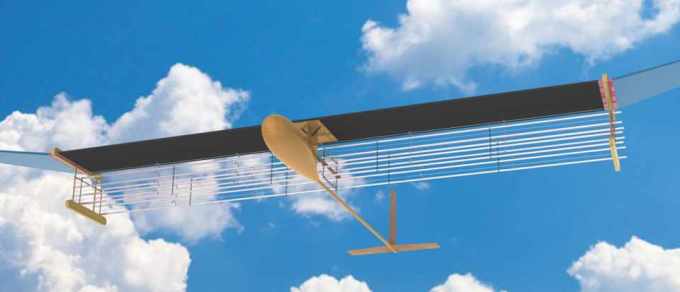
An aeroplane with no moving parts has taken flight for the first time, potentially opening up a new frontier in aviation. Whereas conventional aeroplanes are powered by engines and propellers that give them thrust and uplift, this one flies silently, ‘gliding’ on wind that it generates itself. The system relies on positively and negatively charged electrodes under the wings which ionise atmospheric nitrogen. Travelling along an electric field to the aeroplane’s rear, in the vortex, these ions collide with normal air molecules, creating ‘ionic wind’ to propel the aeroplane.

The project is the brainchild of Professor Steven Barrett, an engineer at the Massachusetts Institute of Technology (MIT), who said his original inspiration came from the science fiction he watched as a child. “I was a big fan of Star Trek and at that point I thought that the future looked like it should be planes that fly silently, maybe with a blue glow. But certainly no propellers or turbines or anything like that”. In adulthood he began to look into how that might be achieved – and stumbled on the concept of ‘ionic wind’, which is not new, but which had been discounted as a means of powering flights in the 1950s.

The technology could, in theory, lead to environmentally clean and silent passenger aeroplanes. But that is someway off! The one tested by MIT was made largely of balsa wood weighing just 2.4kg. After being launched in an indoor gym with a slingshot, it remained aloft for 12 seconds (the same time the Wright brothers achieved with their first successful flight) and traveled 60 meters. See video clip here.

Other forms of ‘clean’ travel has the potential to be found in nuclear fusion, laser propulsion and antimatter. Another short clip here.
iondrivespac-6ba6c16

Redirect to: www.richardthedogtrainer.co.uk

Are humans really responsible for animal extinctions?

It has long been assumed that the giant mammals that once roamed Africa – giant sloths, colossal elephants, antlered giraffes – were hunted to extinction by early humans. But new research suggests another culprit: climate change. Scientists examined fossil data going back seven million years to get a clear picture of when various species of megafauna disappeared. This showed that the decline of diversity began some 4.7 million years ago – long before humans arrived on the scene – and didn’t accelerate even after early humans capable hunting, such as homo erectus, emerged.

When the team mapped the environmental records for the same period, they could see that the extinctions often followed dips in atmospheric CO2 which would have led to deforestation of the African savannah and the expansion of grasslands. “We know that many of the extinct megaherbivores fed on woody vegetation, so they seem to have disappeared alongside their food source”, said co-author John Rowan, from the University of Massachusetts Amherst.

Stiganopithecus

Redirect to: www.richardthedogtrainer.co.uk
 

The dangers of global warming, melting icebergs and rising sea levels.

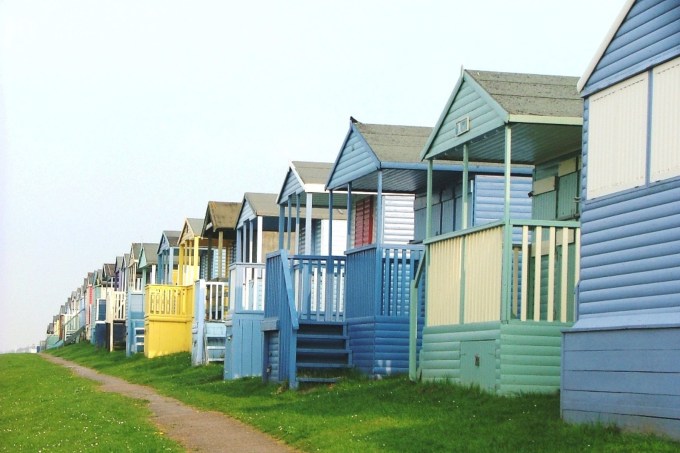
Picture shows beach huts at Holderness, East Yorkshire – could these be the next to fall into the sea?

It is a fine dividing line between ‘natural’ and ‘unnatural’ erosion. Hoderness on the East Yorkshire coast is one of the most vulnerable stretches of coastline in the world and is now retreating at a rate of 1 – 2 metres each year. Is it coincidence that Happisburgh further down the coast in Norfolk is losing one house every year to the sea, or that the cliffs of Seaton, Devon are falling into the sea at an ever increasing rate? Unlikely; so there has to be an underlying cause.

Holderness is exposed to strong prevailing winds from the North Sea. This contributes to the longshore drift causing erosion of the soft boulder clay cliffs and moving the material and other sediments southwards. Since 1086, at the time of the Domesday Book, it has been estimated that two miles of coastline has eroded here. Some 29 villages have surrendered to the encroaching sea since then. The village of Mapleton may be the next to go in spite of the building of sea defenses which has simply moved the problem further away along the coast. Of course this type of activity is largely unavoidable due to these naturally occurring influences, but how much is due to man and his effect on climate change and consequent rising sea levels?

The impact on animal, plant and human life goes without saying; loss of habitat for all concerned in the long term, and in the short term financial ruin for many people who have lost, and will continue to lose their homes and businesses!

Whitstable

Redirect to: www.richardthedogtrainer.co.uk

Should we be encouraging ecotourism?

Ecotourism is a ‘low impact’ form of tourism to market and promote the less well known areas of natural beauty or, conversely, depressed but aspiring areas of the world with the potential to conserve nature. The aim must be to inform both the local and wider populations of the plight of the indigenous flora and fauna. Side effects of ecotourism are many but most importantly will educate and raise awareness of the need to conserve nature. Furthermore it will bring employment, money and enhance the economy of the area. The downside is that large corporations will inevitably syphon off profits. Visitor numbers may potentially act detrimentally and erode the the very thing to be conserved by traipsing over the terrain and disturbing the wildlife. Local customs may be put at risk and the indigenous peoples and animals driven away.

Redirect to: www.richardthedogtrainer.co.uk

Aggression in Dogs and ‘The Goldilocks Zone’!

Aggression in Dogs is a huge subject and whole books have been written about it. Why does it happen, what can be done in the short term, what can be done to help eradicate the phenomenon in the long term and many other questions need to be answered. It appears to be more prevalent in our domesticated dog than wild, feral or village dogs and, indeed, their cousin the wolf. Natural selection, it would appear, is far better able to filter out unnecessary aggression than selective breeding as carried out by overzealous breeders over millennia, but particularly over the last 150 years or so. This is eloquently discussed by David Ryan who describes the ‘Goldilocks Zone’ phenomenon in his book ‘Dogs that Bite and Fight’ (2013). Natural selection will weed out the placid dog, due to inability to survive, along with the highly aggressive dog as the cost outweighs any gain. Sitting in the middle, in the Goldilocks Zone, are the vast majority of ‘average’ dogs!

There are many reasons for aggression but for brevity I will keep it simple. David Ryan goes on to discuss the following scenario. Meg is chewing a bone that Dan wants. Dan lies down next to Meg invading her personal space and staring, causing Meg to feel uncomfortable enough to walk away. If Dan were to show his teeth and snarl to the point of charging Meg, would this be described as dominance aggression? (Ryan, 2013). Aggression certainly; maybe competitive but most people, I feel would agree, dominant! “All dogs are entitled to growl and walk away. Growling and walking towards you is where communication crosses the line into aggression” (Ryan, 2013). This is an example of INTRA-species aggression. INTER-species dominance and aggression by definition will be far more nuanced, difficult to explain and therefore more difficult to deal with.

Whilst the ‘pack theory’ and the theory of a linear hierarchy are now largely discredited, the domestic dog thrives on the security of a structured and secure environment. For a happy and balanced dog the onus is on every owner to provide this along with other essentials, indeed ‘rights’, such as food, water, shelter, exercise and companionship, not to mention guidance and training.

As with ANY aggression, medical and dietary conditions must be ruled out first and referrals should ideally be from a veterinarian. Some health problems can make an otherwise even-tempered dog aggressive. These include, though the list is not exhaustive: dental disease, epilepsy, hip dysplasia, arthritis and hypothyroidism (Hillestad, 2018).


Redirect to: www.richardthedogtrainer.co.uk

Some thoughts on the world’s current population explosion! A definition.

population explosion – A sudden, large increase in a population. In human terms this could be caused by economic growth coupled with the global oversupply of food, increased birth rate, reduction in infant mortality, increase in life expectancy and better healthcare generally, poor education and lack of awareness of birth control, religious reasons and more. Population growth really took off at about the same time as the industrial revolution started. However, since World War II the global population has seen an exponential growth from an estimated 2.3 billion to a now estimated 7.2 billion and expected to reach 9.6 billion by 2050. This growth comes mainly from developing continents and countries such as Africa and, until recently, India. The governments of China and Russia, as examples, are actively encouraging population growth to help support the growing older population as well as for political reasons as the tensions between these two super powers ebb and flow!

The planet cannot sustain this exponential growth indefinitely. It is argued that we are currently experiencing the sixth mass extinction (Holocene extinction) on the planet with only the fittest and richest surviving. Indeed it is estimated that the planet now loses three species every hour! That’s a staggering 26,000 every year. Even taking into account NEW species being discovered there is still an estimated net loss of some 2,000 every year. Modern humans have to take responsibility since their arrival at the top of the food chain. The Law of Correlation (see: www.jarroldpublishing.co.uk) tends to iron out peaks and troughs and the population may well, therefore, be self leveling in the short term. However, life on Earth, as we know it, will ultimately come to an end.

Redirect to: www.richardthedogtrainer.co.uk

Do Autistic People Make Better Dog Trainers than Non Autistic People?

I recently came across a fantastic book ‘Animals In Translation’ by Temple Grandin. This should be compulsory reading for all dog trainers.

Her theory is that autistic people, like animals, think in pictures rather than words. Animals see detail that most humans miss. This is because humans THINK too much; in other words they are abstractified. They cannot see the wood for the trees and very often miss the obvious.

Is it possible, therefore, that autistic people will make better dog trainers than non-autistic people? I am of the opinion that many non-identified people fall on the autistic spectrum somewhere but this goes unnoticed or unidentified. I know I sometimes stumble to find a word, phrase or definition whist seeing clearly in my mind what needs to be said – or is that plain forgetfulness? I also know that I become extremely frustrated when I see details at work, home etc. that other people simply miss, or are they plain LAZY?

NB: Dictionary definition of autism: psychiatry – a developmental disorder whose symptoms include difficulty in responding conventionally to people, actions and social situations, often with limited use of verbal communication. There are, however, many other signs and indications beyond the scope of this blog.

Can Dogs Really Sense Changes in Our Mood?

Not only will our pet dog pick up minute changes in its olfactory environment but also on tiny, almost indiscernible changes in our body language and general demeanor. As a means of survival, dogs have developed this ability as a primitive instinct. Some will call this intuition but this is when it all starts to get philosophical! Responsible dog trainers and behaviourists do not think philosophically but scientifically. Dog training is firstly a science and secondly an art. Some people have the knack, others don’t. Animals think in pictures; they simply don’t have the vocabulary to express themselves. Humans have turned this to their advantage leading to the many breeds (I am thinking specifically about working breeds) we have today, not least of which are assistance dogs.

One branch of this is the training of dogs to assist war veterans and others suffering Post Traumatic Stress Disorder (PTSD). Returning to the original question, can dogs indeed gauge mood; are they capable of feeling empathy, even sympathy? In his 2012 blog, Stanley Coren cites an example of a dog reacting to a baby’s cries. The dog is clearly moved and seeks comfort from its human. Coren goes on to suggest this may be mood contagion and that the dog is comforting himself, as the result of a cortisol boost, rather than showing empathy or sympathy for the baby. However, later in 2012 Deborah Custance and Jennifer Mayer from London’s Goldsmiths College conducted research involving not only dogs’ owners, but strangers in the same room. In turn they would feign crying and the dogs would actually approach the strangers appearing to offer solace.

Just this year, Dr Gregory Berns, a neuroscientist at Emory University, Atlanta, trained dogs to go inside an MRI scanner. There are striking similarities between a dog’s brain (and mammals generally) and a human’s. The caudate nucleus is rich in dopamine receptors. (Dopamine is a neurohormone and may be described as the ‘pleasure’ or ‘addiction’ hormone). This part of the brain is responsible for the actions of an individual when in a state of anticipation – the information is received and a decision has to be made about the course of action. The findings are that dogs are capable of feelings similar to that of humans and are indeed sentient. It would appear we have bred our dogs not only to show empathy but also sympathy. The more sceptical might suggest that the dogs are actually responding to the slightest changes in body language or curiosity at a person’s reaction.

After some 15,000 years of co-existence with dogs, it is unlikely that we share no emotional similarities – after all we are able to read their facial expressions and body language, as they can ours!

Not as bad as it appears. Dr Berns, along with his assistants, trained the dog/s especially, monitoring carefully heart rate and other factors!

_73119911_611a97e7-1bd9-4caf-bcec-751a122da7f0

A Brief Definition of Life!

Perhaps the most obvious criterion for life is being able to reproduce. If something is alive, then it must be able to produce copies of itself, which may or may not be identical. But this criterion is not sufficient on its own because crystals are able to grow and produce identical copies of themselves if placed in a salt solution. And no one would argue as to whether or not crystals are alive.

To the ability to to reproduce we need to add the ability to evolve. For something to be alive, the copies it produces of itself need to be able to change gradually across the generations in response to environmental factors. Evolution in the domesticated dog world can happen quickly, after only a few generations by selective breeding. If left to nature, the same changes would take millennia to occur through the process of natural selection.

Some questions to ask if an organism is alive: 1. Is it made up of at least one cell? 2. Does it metabolise – does it use and release energy? 3. Does it grow and change over time? 4. Does it respond to any physical, chemical or environmental stimuli? 5. Does it reproduce either sexually or asexually, and evolve? If the answer is NO to any of these questions, then what you’re looking at is actually NOT alive!

At its most basic level life must contain organic molecules of carbon and hydrogen.

www.cybernetpublishing.com

Why we should not leave our dogs to ‘graze’!

Most obviously, a dog left with a permanent supply of food upon which to graze will soon put on weight.  Unlike a solitary cat, a dog will gorge – presumably a throwback of evolution and not knowing when the next ‘kill’ will be to feed a hungry pack. It could also result in poor training (especially toilet training), a lack of routine and a fussy eater due to loss of appetite. In a multi-dog household it may result, at best, in competition between the animals and, at worst resource defending and aggression. The daily highlight for many dogs is their meal, whether once, twice or thrice daily. Older dogs will invariably indicate their preference in this respect, most preferring smaller but more frequent meals. However, a constant supply of fresh water should be left out as even a 15% loss of body fluid can result in severe dehydration and even death. There is a special relationship with a dog, and other domesticated animals, forged, in part, by the human being the supplier of food and other comforts. This relationship may be jeopardized and the ‘head of household’ status of the human compromised. For example an elderly dog owned by an elderly human may receive little mutual bonding or interaction apart from meal times!

www.cybernetpublishing.com