Dogs were bred to pull our sleds millennia ago!

The 9,500 year old remains of a dog found on the tiny island of Zhakhov, northern Siberia, are remarkably similar to living dogs in Greenland, genome sequencing has revealed. The discovery shows that people bred dogs for pulling sleds more than 10,000 years ago.

Mikkel Sindling and his team from the University of Copenhagen, Denmark, excavated the remains from an ancient human settlement, along with other less well preserved dogs alongside what look like dog sleds. “We thought it would be a primitive dog, but it’s a long way down the path to domestication – that was quite sensational”, says Sindling.

His team sequenced the remains, along with a 33,000 year old Siberian wolf and 10 living sled dogs from different parts of Greenland, and compared their genomes with each other as well as other dog and wolf genomes. The results show that modern sled dogs in Greenland, who’s ancestors were taken there by Inuit people around 850 years ago, are more closely related to the Zhakhov remains than any other kinds of dogs or wolves. The genomes also show that sled dogs have not acquired any DNA from wolves in the past 9,500 years. Sindling adds “It’s largely the same dog doing the same job”.

H8x6TWo_-9KNq3q4YUMpvULE3C1w4cTCSUJf_u8L7Ec
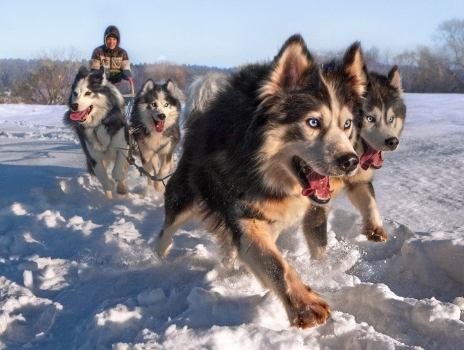
A modern day husky rig!

Climate change: can we trust the scientists?

A vast accumulation of evidence substantiates the adverse effects that human activity is having on the levels of greenhouse gasses in Earth’s atmosphere leading to changing weather patterns. This evidence has been collected over the last few decades by scientist from a wide section of specialisms and all corners of the globe. However, behavioural psychology suggests that we (humans) can never be totally objective and that our values and beliefs affect how we engage with facts. The scientific community is split; some arguing that the facts need to be addressed and reversed, whilst others argue it is already too late and that we should, for example, be concentrating on alternative and renewable energy research. The distinction may seem somewhat blurred but is, nevertheless, an important one!

Contrary to the image that scientists collect data, gather theories and form a hypothesis totally objectively is, by the standards of social science and psychology, a misguided one.  Facts are open to interpretation, bias and the values of a particular scientist. They may be guided by what they want and expect to see rather than what they actually see – in other words they become subjective.

It is important, therefore, that the scientific community acts consensually, pooling knowledge and stretching the boundaries. In 1962 the American philosopher of science, Thomas Kuhn (1922-1986), introduced the term paradigm shift – the move away from a particular theory or model. He argued that scientific knowledge does not grow linearly but is an accumulation of, sometimes opposing, theories. This opens up possibilities that would not have otherwise been considered. Science can never be exact and, by definition, a theory is only scientific if can be falsified, tested or refuted. For example ‘all the ducks I’ve seen have feathers, therefore ALL ducks have feathers’. Compare this with ‘all birds have feathers, therefore all ducks are birds’. Which is the scientific statement?

To answer the original question, yes, of course we can and must trust the scientists – after all who else is there?……………….to be continued.

Thomas_Kuhn
Thomas Kuhn in 1972


It’s official: the sixth mass extinction is here.

The following is reported by The Guardian:

Scientists have found evidence that the disappearance of wildlife is occurring at a rapidly increasing rate – renewing fears of a human prompted ‘sixth mass extinction’ (named the Anthropocene Extinction) which will endanger our survival. When researchers looked at 29,400 terrestrial vertebrate species for which population data is available, they found that of 543 extinctions that occurred since 1901, 173 took place between 2001 and 2014. The trajectory is set to continue climbing. 515 species are are now classed ‘critically endangered’ by the IUNC; that is with populations fewer that 1,000. Examples include the Sumatran rhino and the Hainan gibbon.

Here I digress from the article:

So much of this loss is as the result of human activity, for example an increasing population forcing towns and cities to expand into nature’s habitat. The forcing together of wild animals, especially in meat markets of eastern Asia, often in appalling conditions, means that disease and viruses are more easily transmitted between species.

This was the case in Wuhan, when COVID-19, it is thought, passed from bats – which have a natural immunity – to pangolins. From here it jumped to humans. It appears not to jump the other way as the virus seeks a healthy and hardier species to invade; it is not in its interest that the host should die. The fear now is that it will pass to hitherto unaffected regions of the world, higher primates and, who knows, elephants, dolphins and whales……the list goes on!

In spite of fears of a second peak and subsequent peaks in COVID-19 cases, the UK and other governments have to balance the risk of relaxing the recent punitive measures against a severe and continuing downturn in their economies. This has the potential to prove fatal to human existence on earth. A vaccine has not yet been developed (NB – at the time of writing). The common cold, another form of coronavirus, is still endemic. Could cases worldwide exceed those of the bubonic plague of 1347 killing an estimated 475 million people, 20% of the, then, world’s population and taking some 200 years to recover? Well, this may or may not happen; the current crisis could, if we are lucky (!), prove to be a mere stutter towards the inevitable extinction of life as we know it.

A previous blog examines this question in more detail:
https://volatileplanet.blog/2020/04/03/a-planet-in-crisis-is-this-the-beginning-of-the-end/

download (1)
The Hainan gibbon found in Hainan island, China

BBC News reports the killing of a Ugandan silverback mountain gorilla!

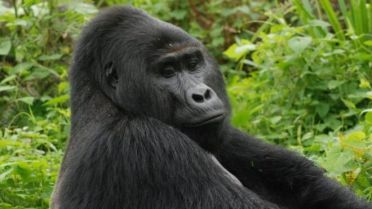
One of Uganda’s best known mountain gorillas, Rafiki, has been killed. Four men have been arrested and face the possibility of a life sentence under a wildlife protection law that was passed last year. They are claiming self defense!

There are just over 1,000 mountain gorillas in existence in parts of the Democratic Republic of Congo, Rwanda and Uganda. The Ugandan Wildlife Authority (UWA) described Rafiki as 25 years of age and the leader of a group of 17 mountain gorillas within the Bwindi Impenetrable National Park (ironically). The group was further described as being habituated to human contact, but that the group is now unstable and may now disperse without a figurehead! Failing that, the group could be taken over by a wild silverback gorilla and revert to the wild. Potentially this would have an impact on tourism to the park with loss if revenue, upon which the Ugandan government relies.

In 2018, the mountain gorilla was removed from the list of ‘critically endangered’ species by the International Union for Conservation of Nature (IUCN), after intensive conservation efforts, including anti-poaching patrols. It was downgraded to ‘endangered’.

_112873602_whatsappimage2020-06-12at11.23.53-2
Rafiki

_104333304_mountain_gorilla_640-nc

Dogs, now goats understand pointing!

Not only do dogs, higher primates, African elephants and horses understand pointing, but research now shows that so too can goats. Goats, of course, are usually associated with their gluttonous eating habits rather than their brain power! At a goat sanctuary in Kent, scientists conducted research by placing two buckets apart, one empty and one containing food, in front of the experimenter. When pointing to the full bucket, more that half the goats from the herd would approach the full one. This was further challenged when the experimenter sat in front of the empty bucket whilst pointing to the full one. The results were similar. This indicates that the goats are able to ‘generalise’ the gesture.

Of course further research would be needed due to the relatively small number of goats involved.

Reported recently in The Guardian

5616

Current lockdown; a boon for hedgehogs, deer, whales and wolves!

Recently, the UK has sighted significantly more hedgehogs, deer and other wildlife due to fewer people and less traffic, giving them the confidence to come closer to our homes. Further afield, whales are also benefiting due to less stress being caused by the low frequency rumbles from shipping.

Furthermore, a lone wolf has been spotted in Normandy for the first time in a century! Wolves were hunted to extinction in France in the 1930s (and in the UK in the late 1700s). They started to reappear in the 1990s, having crossed the Alps from northern Italy, and a population of more than 500 is now concentrated in the south east and east of the country.

Wolf aficionados would like to see them reintroduced to the British Isles. Tony Haighway of Wolf Watch UK, Shaun Ellis of The Wolf and Dog Development Centre in Lostwithiel and Dr Isla Fishburn of Kachina Canine Wellness are amongst them. The Cairngorms National Park in the north east of Scotland seems the obvious place. Critics say, unsurprisingly, that their reintroduction would pose a danger to livestock, ramblers and upset the biosphere. There are humane methods around this problem as Ellis demonstrated whilst living in Poland and the United States. Tourism could actually be encouraged by way of wolf safaris though sightings may be rare as the wolf is generally shy and retiring!

An area of further study and we watch with interest.

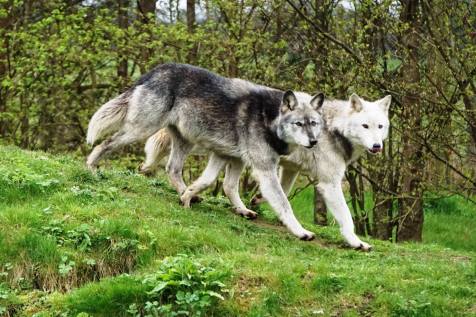
In perfect unison – the wolf is truly a pack animal!
Photo by Richard Jarrold © CybernetImages.com

25073282_10214596357040118_3417151793725120847_o


The link between serotonin and dog behaviour in a low vs high protein diet.

Dogs are of the taxonomic order Carinvora but are not obligate carnivores and may be described as omnivores, indeed, being able to tolerate a diet high in carbohydrates. However, in March 2019, Dr Emma Bermingham et al of AgResearch at Massey University, New Zealand, conducted a study into dog nutrition. The researchers said: “Up until now science has looked at studies on nutrient digestion in humans, mice and rats and assumed the same to be true of dogs………………..much more needs to be done to understand the digestive system of dogs and the long-term health consequences of feeding different diets”. Dr Bermingham goes on to say: “We already know dogs have no nutritional need for [added] carbohydrates in their diet, so this study looked at the role different bacteria, and its production of serotonin, play in a dog’s digestive system to help us work toward a clearer picture of what is the optimum diet for dogs” (Bermingham, 2017).

Serotonin, an amino acid, is one of the constituent molecules of proteins involved in sleep, memory, mood, depression, aggression, pain, anxiety, temperature regulation, eating behaviour and other neurological processes. It is manufactured in the brain and the intestines the majority of which, between 80-90%, can be found in the gastrointestinal (GI) tract. It is also found in the blood platelets and the central nervous system (CNS) as a neurotransmitter – though is not classified as a hormone. It is synthesized from tryptophan (trp). Tryptophan in the body has to compete with large neutral amino acids (LNAAs) found in protein, too much of which can, therefore, be potentially detrimental to a dog’s behaviour. However, using a two pronged approach the ratio of tryptophan to LNAAs can be increased in order to enhance good mood (and potentially behavioural issues) in dogs. Firstly by increasing, in the diet, food rich in tryptophan such as turkey, chicken, salmon, certain red meats, oats, beans, lentils, pineapple and others. Secondly, whilst these foods alone will not boost serotonin levels and, indeed, may upset the balance causing a shortage of serotonin, the addition of certain carbohydrates in the diet will aid its absorption. These include brown rice, whole grain, fish, eggs, wheat flour, sweet potatoes, peas, carrots, beet pulp, chia seeds and oatmeal.

Nicholas Dodman, along with Drs. Richard and Elizabeth Wurtman of the Massachusetts Institute of Technology, conducted studies in 2000, the results of which were published in the Journal of the American Veterinary Medical Association (AVMA). The objective was to “evaluate the effect of high and low protein diets with or without tryptophan supplementation on behaviour of dogs with dominance aggression, territorial aggression and hyperactivity” (Dodman et al 2000). Given that the research is now 20 years old and only 33 dogs were tested it is most certainly not conclusive. The results were that dominance and territorial aggression scores were highest in dogs that were fed supplemented high-protein rations. Significantly lower results were obtained by feeding a low-protein tryptophan supplemented diet rather than low–protein diets without tryptophan supplements.

The results for hyperactivity appear less conclusive. In a report by Dr Karen Becker at HealthyPets-Mercola.com, she points out that hyperactivity and/or ADHD is rare amongst canines and that often, reported cases are misunderstood and may be age or breed related (Becker, 2017). The report also points out that low-protein diets for young and growing dogs should only be given under strict medical supervision.

In conclusion, protein, a macronutrient and source of slow release energy, should ideally not exceed 25% of total diet. Nicholas Dodman et al have concluded that there is a correlation between high protein diets and fear based territorial and dominance aggression. Conversely, the behaviourist and author, William E Campbell, found, in another study, that feeding more protein and fewer carbohydrates improved learning and reduced hyperactivity.

A well balanced diet, therefore, is essential for our dogs, containing, I would suggest, primarily high quality meat based protein, including organs – heart, kidney, liver – for optimum ‘performance’ whether this be dry, wet or ‘natural’ home cooked or raw food. As a treat, oily fish and cooked eggs are an excellent source of fatty acids and protein respectively along with green vegetables, certain fruits and cereals which may help boost serotonin levels (as discussed). Dogs (and cats) will sometimes forage for grass, even berries, possibly as a form of ‘self medication’. Commercial pet food manufacturers have an obligation to domesticated animals, but alas also have an obligation to their share holders and the ‘bottom line’. Learning to read the label is important as cheap meat derivatives, water, vegetable and cereal ‘fillers’ are invariably included. It is clear the ‘jury is still out’ regarding a dog’s ideal diet!

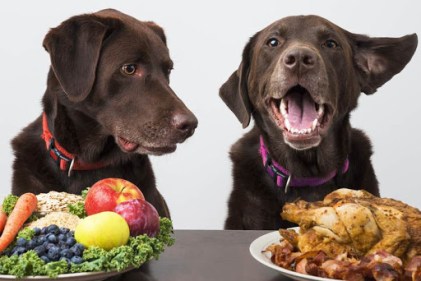
You’ve drawn the short straw this time!
unnamed

Does your dog ‘hump’?

There are several reasons why a dog may hump. This can occur from early puppyhood, through to adolescence and adulthood. A playful pup, either male or female, may become over excited when playing and cannot decide between two choices – for example to run away or chase – so in the heat of the moment will decide to mount in sheer frustration. This may be any object; cushions are a good example, but usually another dog or the leg of a convenient human! The answer here would be to offer the dog a distraction – anything other than food as this may be interpreted as a reward – and calm him/her down before this escalates into nipping and biting. Alternatively, a firm ‘leave’ may be appropriate, depending on the level of training acquired and the dog’s understanding of this cue, but this must not be allowed to escalate to outright confrontation and the ‘fight-or-flight’ response kicking in. However, the dog has self taught a pleasurable experience which may soon become a pleasurable habit if not resolved at an early stage.

In the case of an adolescent dog or a bitch in heat this behaviour may be more to do with hormones and/or the onset of puberty. Veterinary advice should be sought and neutering may resolve this. If the habitual cycle has onset then further training, as described above, is necessary. Exceptionally this may the onset of Obsessive-compulsive disorder (OCD) sometimes known as Canine-compulsive disorder (CCD).

Is dominance at play here? Dr Becky Trisko, recently of the University of Michigan (Datta, 2017), states that dog on dog and dog on human relationships are far more complex and nuanced than simple dominance, though this appears to play a part when playing or fighting. Recent studies have shown that dogs are capable of complex social emotions such as love, loneliness and jealousy and benefit from forming close friendships and the subsequent release of Oxytocin – “…..they worry about things not essential to their survival” (Campbell, 1999).  She studied three forms of agonistic behaviour – dominance, submission and aggression. These communicate status and are unidirectional. A dominant dog will have an upright, stiff posture and may hump the head or lick the muzzle of a submissive dog. If humping has been left to escalate and the dog is dominating, or become overly attached to the owner, then expert help may be needed!

As dogs are clearly not pack animals (as discussed in a previous blog) it is unlikely that the behaviour is dominance related per se. (A study of wolves would suggest otherwise). Furthermore, the fact that a dog may attempt to hump the head of another dog is, put in its simplest terms, a perverse act that he simply enjoys – dominance lead, sexual or otherwise!

Puppy play?

Cocker-Spaniel-puppy-grabbing-a-childs-pants-with-its-mouth-while-trying-to-play-outdoors.20190811214315502

Dog breeders need to pay more attention to behaviour and health traits; not simply looks!

As a canine behaviourist I was not entirely surprised to read this article from The Guardian. However, what is surprising is the HUGE proportion – more than 70% – of dogs with behavioural problems (in this particular study). I wonder if this translates to the HUMAN population at large? It is a known fact that a stable environment and society breed stable dogs. As an aside, the US has the highest proportion of dogs with behavioural issues. Perhaps the carrying of guns encourages aggression which, in turn, translates to aggressive dogs!

The following is a study by Prof Hannes Lohi et al, of the University of Helsinki:

Dog breeders need to take action to improve canine mental health, the study reports, after research found almost three-quarters of pet dogs have highly problematic anxiety-related behaviour.

While physical problems such as breathing difficulties and other health concerns relating to, for example, squashed-nosed breeds have become a hot topic, the study suggests breeders also need to focus on dogs’ behaviour. “Behavioural problems are the leading cause for the relinquishment or euthanasia of the dogs,” said Prof Lohi, a co-author of the study.

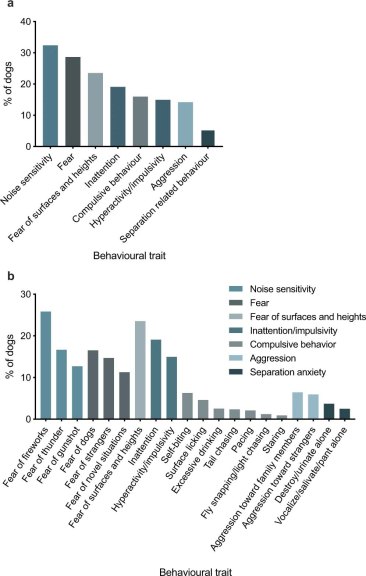
The study, published in the journal ‘Scientific Reports’, is based on a survey of owners of more than 13,700 pet dogs in Finland, spanning 264 breeds and ranging from young pups to elderly hounds. It examined the frequency of eight anxiety-related traits (see chart below), including noise sensitivity, fear, aggression, separation problems and compulsive behaviour, as well as sub-traits within these categories, such as tail-chasing. 

It found that 72% of dogs had highly problematic behaviour in at least one of the eight categories and many had multiple problems. Almost a third of dogs showed high sensitivity to noise, with fireworks a particular problem. 29% of dogs were said to be highly fearful and 14% showed highly problematic aggression. “We observed some differences such as male dogs being more often aggressive and impulsive, while female dogs were more fearful,” said Lohi.

There were also differences by age: for example, high noise sensitivity was more common among older dogs, while destructive behaviour when alone – classed as a type of separation issue – was more common in young dogs.

The team also looked at particular breeds, finding that while dogs of any breed could have any of the anxiety problems, particular traits were more common in certain types of dog. “As a result, selective breeding focusing on behaviour may reduce the prevalence of canine anxieties,” the authors said. Miniature schnauzers, for example, had high levels of aggression both towards strangers and family members, and a fear of strangers, while nearly 10% of Staffordshire bull terriers chased their tail.

Perhaps surprisingly, the team found that mixed breeds were more likely to show many of the various traits than purebred dogs – although the researchers say that may be because many of the former were probably rescue animals that potentially had had a difficult start in life and a lack of socialisation.

The study has limitations: it is not clear if the trends would hold in other countries, and the team only looked at the frequency of behaviours and not their severity. It may also be that owners of dogs with behaviour problems may have been more likely to complete the questionnaire, although the researchers say their study was advertised to all owners and the findings chime with other research.

Dr Rowena Packer, an expert in animal behaviour and welfare from the Royal Veterinary College, said a dog’s genetics and their environment each contributed to the way they act. “The way that both breeders and owners interact with dogs is hugely important in raising mentally healthy dogs,” she said. “This includes appropriate socialisation to people and other animals and habituation to day-to-day experiences as puppies, and positive, force-free training throughout life.”

Packer noted that when it comes to heritable traits, too often the emphasis is on looks over behaviour. She said that because genetics and early environment set up dogs for the rest of their lives, breeders must do more to produce behaviourally healthy dogs.

“Some of the behavioural problems highlighted in this study can lead to a lifetime of misery for affected dogs and an emotional and financial burden on their owners,” she said. “Tackling these problems through selection of behaviourally sound breeding stock, along with educating owners on appropriate interactions, environment and training for dogs, should be a high priority for all dog lovers.”

Chart shows the eight anxiety-related traits with sub-traits below:

Salonen-Fig1

Cognitive Dissonance: Are we consistent with our dog training?

Sometimes the dog/human relationship can become fraught with tension and anxiety. As far as the human is concerned he/she is doing nothing wrong; they love the dog profoundly and meet their every need. In fact this may be EXACTLY the problem; who is training whom? Many owners, especially in a multi person household, may be inconsistent with their training – for example the primary carer allowing the dog onto the bed whilst their partner shoos the dog off. In the mind of the dog what must he do – go on the bed or stay off? Bring a small child into the equation and we add a third dimension! The child may unwittingly reward the dog for being on the bed one minute and on the floor the next. Before long we have a confused dog, leading to stress and anxiety and potentially causing him/her to come between the carers and appearing to act in a ‘jealous’, sometimes aggressive, way. Orla Doherty states, “Many dogs reacting aggressively to their owners also show concurrent signs of anxiety and fear. This is a contradiction to the traditional attitude that most dominant dogs were confident dogs, regarding themselves as alpha dog in the pack…………..In recent years this theory has been challenged” (Doherty, 2012).

Disney is famous for his anthropomorphism of animals. For a good story, the producers of Lassie and Rin Tin Tin endowed their characters with the cognition of humans to the point of recognising fairness, sharing and ‘talking’. We must allow our dogs to be dogs and learn to ‘think dog’ by offering consistent training, understanding that dogs are essentially selfish, asking, “What’s in it for me?”, being firm but fair and offering adequate physical and mental exercise. On the face of it simple enough, but cognitive dissonance (a useful idea from social psychology (Stewart, 2006) – the inability to hold two opposing beliefs at the same time – does, I believe, play a huge part here. For example, “I like my dog on the bed but I don’t want to encourage bad habits”. This causes, for the owner, psychological conflict, so he/she may simply choose to stop thinking about it, or overlook or reverse one side of the equation!

Is there also a health risk?

5447305_l