DIPTONGO

A short story.

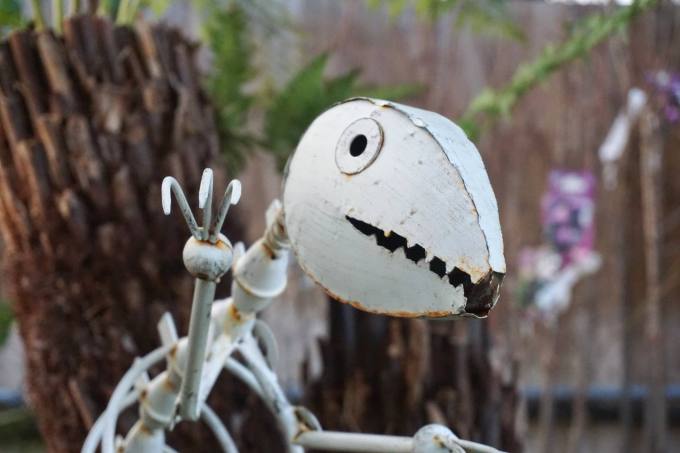
Diptongo is a very nice man. The problem is he has a split personality.

On days WITHOUT the letter ‘d’ he can be very determined and forceful ruling his kingdom with an iron fist. His best friend and brother in arms had better watch out as Diptongo has one eye on his brother’s throne and one eye on his own back. You see, he is ambidextrous and imagines himself to be a chameleon. To make matters worse he kicks his football with his left foot; his right foot on Sundays. And to think they say a leopard never changes its spots!

On the other days Diptongo can be weak with a liver of lily juice. He lives in the clouds with the cuckoos. His holy residence, however, is upon the Plain of Salisbury. The Wise One told the Court that his preoccupation is with the arid, scorched earth of Almeria and that he visits his brother upon the spirit of the Sweet Stuff.

His favourite meal is shrimp soup and marshmallows washed down with a pint and a half of Bitter Sweet. On Sundays he unties his pink ribbons and drinks two hogsheads of Babysham.

Diptongo’s third cousin, Dramaticus, has, since school aspired to become a poet. However, his tutors at the Iglesia de Santa Maria in Mahon had different ideas. They said he should get a proper job as a monk in the Great Shrine of Tanzania in the foothills of Mount Kilimanjaro. Dramaticus saw a hole in the wall, through which he made The Great Escape, then plugged the hole with another brick. At the age of 61 he had become the Poet Laureate for the mighty King Obama in La Casa Blanca. It was not easy as there was stiff competition from Diptongo’s other third cousin, Egbert, from Oslo. Dramaticus managed to keep a stiff upper lip and won the Bicycle Race to La Casa Blanca.

However, I digress and this is another story for the next millennium. In the meantime The Wise One spotted another hole in the wall. He suggested to the Court of Salisbury that Diptongo, having kicked his football into touch, be spirited to the lap of King Juan of Almeria. His true love lay there regardless. Here they should be married thus cementing Anglo-Spanish relationships for the next millennium and a half. Or at least until the passing of the ozone, predicted by The Wise One, to be on the thirtieth day of February in the year of Our Lord two thousand and thirteen. King Juan and Queen Diptonga (as he became known) lived happily ever after having raised a family of five and eighty crabs, two and forty doves and a partridge in a pear tree. SOL. Silencio.

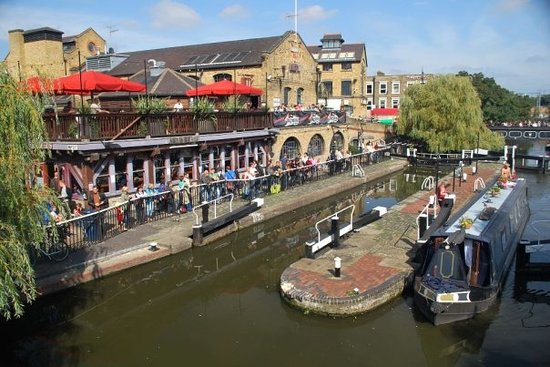
Diptongo on a recent visit to Camden Lock.
17353337_10212135909450466_6908263042103439158_n

Capitalist Realism vs Socialist Realism!

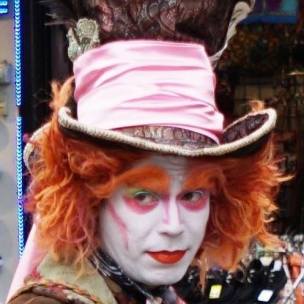
First came ‘socialist realism‘ and ‘realistic art‘, an art form depicting the ‘glory’ of communism by portraying its achievements as if in the real world. Established in the Soviet Union in the 1930s but equally applying to many other communist regimes worldwide. In contrast, and almost as an antidote, came ‘capitalist realism‘ and ‘pop art‘. This stresses the materialistic ideology of capitalism and has hitherto been associated particularly with Germany, the UK and America, starting with the pop art culture of the 1950s and 1960s and commodity art in the 1980s and 1990s. The pictures show examples of realistic art and pop art.

Mark Fisher, in 2009, famously wrote ‘Capitalist Realism – Is There No Alternative?’ published by Zero Books. This is available through Amazon.


The Gentrification of Regeneration!

Since the decline of manufacturing industries in the UK the country places much emphasis on the export of services, especially financial services and banking. This has led to the centralisation of power and money in the south east and in particular London. Successive governments have attempted to regenerate other regions of the UK with cash injections, incentives and marketing ploys to bolster local economies and communities – to their bemusement. Think of the Northern Power House initiative under the Cameron government which the May government appear to have reneged on though this is denied. Ever growing austerity has largely turned the idea into a pipe dream!

Gentrification of regeneration is a covert attempt by central and local governments along with planners to sweep poverty under the carpet in the hope that monied people will see investment opportunities, move in, buy properties and shops thus dragging an area up by the boot straps. An example is Camden Town in north London.

I spent much of my childhood in Camden Town, eight stops up from Waterloo on the Northern Line. The Lufwaffe dropped many thousands of tons of bombs on Camden Town during the blitz though nothing like those dropped on the East End and the northern cities. My father walked me round the back streets to survey the damage with exposed wallpaper and curtains flapping in the wind. Oddly my parents, aunts and uncles spoke very little of this odious episode in history.

Some years later the railway bridge over Camden High Street received a coat of paint and the words ‘Camden Lock’ appeared in bright yellow on a green background. This had the apparent effect of marking the beginning of the end of the decades of austerity the area had known. Almost overnight the tramps and associated poverty seemed to disappear. The greengrocer stalls were replaced with tacky souvenir stalls selling memorabilia of the Royal Family and London buses. Nowadays an eclectic array of independent retailers live and work alongside some well known national brands such as Costa Coffee, Bon Marché and others.

The souvenir vendors are still present but have mostly moved indoors to the shelter and warmth, indicating that there is, indeed, money to be made from the sale of their wares; the prices inexorably keeping up with inflation. Paradoxically, a basement flat only 300 yards away will cost well in excess of a couple of million – money my parents could only dream about! Of course this is prime commuter belt and other towns and cities do not have this luxury – think of Swansea, Bognor Regis, Barnsley and many others. Conversely, Sheffield, Leeds, Newcastle and Manchester are reviving, albeit largely on the back of gentrification!

london-camdem-lock-13

Redirect to: www.richardthedogtrainer.co.uk

The Power of Ionic Wind.

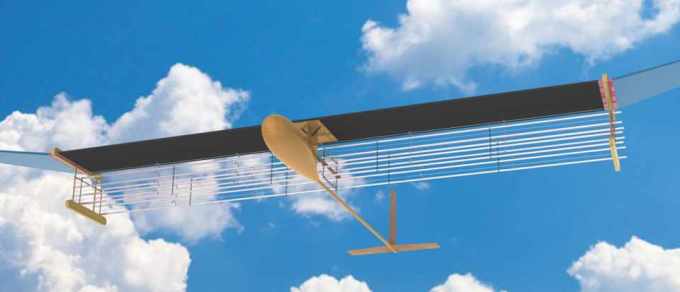
An aeroplane with no moving parts has taken flight for the first time, potentially opening up a new frontier in aviation. Whereas conventional aeroplanes are powered by engines and propellers that give them thrust and uplift, this one flies silently, ‘gliding’ on wind that it generates itself. The system relies on positively and negatively charged electrodes under the wings which ionise atmospheric nitrogen. Travelling along an electric field to the aeroplane’s rear, in the vortex, these ions collide with normal air molecules, creating ‘ionic wind’ to propel the aeroplane.

The project is the brainchild of Professor Steven Barrett, an engineer at the Massachusetts Institute of Technology (MIT), who said his original inspiration came from the science fiction he watched as a child. “I was a big fan of Star Trek and at that point I thought that the future looked like it should be planes that fly silently, maybe with a blue glow. But certainly no propellers or turbines or anything like that”. In adulthood he began to look into how that might be achieved – and stumbled on the concept of ‘ionic wind’, which is not new, but which had been discounted as a means of powering flights in the 1950s.

The technology could, in theory, lead to environmentally clean and silent passenger aeroplanes. But that is someway off! The one tested by MIT was made largely of balsa wood weighing just 2.4kg. After being launched in an indoor gym with a slingshot, it remained aloft for 12 seconds (the same time the Wright brothers achieved with their first successful flight) and traveled 60 meters. See video clip here.

Other forms of ‘clean’ travel has the potential to be found in nuclear fusion, laser propulsion and antimatter. Another short clip here.

iondrivespac-6ba6c16

Redirect to: www.richardthedogtrainer.co.uk

Are humans really responsible for animal extinctions?

It has long been assumed that the giant mammals that once roamed Africa – giant sloths, colossal elephants, antlered giraffes – were hunted to extinction by early humans. But new research suggests another culprit: climate change. Scientists examined fossil data going back seven million years to get a clear picture of when various species of megafauna disappeared. This showed that the decline of diversity began some 4.7 million years ago – long before humans arrived on the scene – and didn’t accelerate even after early humans capable hunting, such as homo erectus, emerged.

When the team mapped the environmental records for the same period, they could see that the extinctions often followed dips in atmospheric CO2 which would have led to deforestation of the African savannah and the expansion of grasslands. “We know that many of the extinct megaherbivores fed on woody vegetation, so they seem to have disappeared alongside their food source”, said co-author John Rowan, from the University of Massachusetts Amherst.

Stiganopithecus

Redirect to: www.richardthedogtrainer.co.uk