Population explosion – or decline?

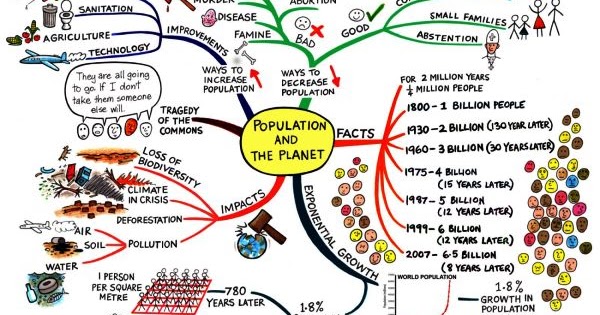
Population explosion – a definition: – A sudden, rapid increase in a population. In human terms this could be caused by economic growth coupled with the global oversupply of food, increased birth rate, reduction in infant mortality, increase in life expectancy and better healthcare generally, poor education and awareness of birth control in some countries, religious reasons and more. Population growth really took off at about the same time as the industrial revolution started. However, since World War II the global population has seen an exponential growth from an estimated 2.3 billion to a now estimated 7.2 billion and expected to reach 9.6 billion by 2050. This growth comes mainly from developing continents and countries such as Africa and, until recently, India. The governments of China and Russia, as examples, were until recently, actively encouraging population growth to help support the growing older population, as well as for political reasons, as the tensions between these two super powers ebb and flow!

The planet cannot sustain this exponential growth indefinitely. It is argued that we are currently experiencing the sixth mass extinction (Holocene extinction) on the planet with only the fittest and richest surviving. Indeed it is estimated that the planet now loses three species every hour! That’s a staggering 26,000 every year. Even taking into account NEW species being discovered there is still an estimated net loss of some 2,000 every year – and this is true particularly in the insect world due to changes in farming methods, pesticides and climate change. Modern humans have to take responsibility since their arrival at the top of the food chain. The Law of Correlation tends to iron out peaks and troughs and the population may well, therefore, be self leveling in the short term due to checks by nature – famines, floods, pandemics and other disasters.

In 1798 the cleric and philosopher Thomas Robert Malthus, in his essay ‘Principles of Population’, decreed that a population, if left unchecked, would increase at a geometric rate (1,2,4,8,16,32…..) and would double itself every 25 years. Food production, on the other hand, increases arithmetically (2,4,6,8,10….) and, therefore, food would eventually run out. His prognosis was that within two thousand years, such would be the growth of population that it would be incalculable – if indeed it still existed! He spoke of ‘preventative checks’ and ‘positive checks’. Preventative checks insofar as humans are able to check their own behaviour, for example limiting family size, marrying later and exercising self control to maintain a higher standard of living with fewer children. Positive checks are those supplied by nature in the form of famines, floods, earthquakes, diseases, pandemics and other disasters causing the population overall to ultimately decline. Lets not forget also the ultimate man made disaster: war.

The Malthusian theory did not take into account the effects of industrialisation, mechanisation of food production and globalisation. Malthus could not have possibly foreseen these events or the rise of feminism over the decades to come, empowering women, at last, to have a say in their own future and wellbeing (and that of the planet). The cumulative effect has seen the beginning of a new chapter and an empirical based philosophy.

Fast forward to 1973 when the Norwegian philosopher Arne Naess wrote of two kinds of ecological movement. The shallow kind, concerned with human interests particularly in the developed world and the deep kind, concerned with peoples of the developing world and the rights of other species affirming their equal rights to live and blossom. He acknowledged the need to kill animals and harvest plants for the long term benefit of humans but adhered to the principle that all species have the right to live their own way of life. He called this ‘biospherical egalitarianism‘. (This brings us to next week’s blog – ‘The Rights of Animals’). This more broadly expands into ‘biological diversity‘ encompassing as broad a range of species as possible with all things living in harmony for the good of animals and life-enhancing experiences for humans.

Naess’s ‘Deep Ecology’ platform advocated, in many ways not unlike Malthus, a significant reduction in the human population. This was necessary to ensure the continued flourishing of those remaining along with other species. This led to some of Naess’s advocates to welcome the thought of the ‘positive’ checks mentioned above! Needless to say others were horrified at the idea.

In their 2019 book ‘Empty Planet’, Darrell Bricker and John Ibbitson write, “The great defining event of the 21st century will occur in three decades……..when the global population starts to decline”. Their claim is made on the ‘simple fact’ that in most regions fertility rates are falling thanks to a combination of female empowerment, urbanisation and greater affluence. In Brazil and China “astonishing” numbers of women now opt for early sterilisation (“half of Chinese couples take this route”); “in South Korea and Japan women delay childbirth until their late 30s or forego it altogether”; most ethnic groups in the US now have below replacement birth rates. The authors suggest that pressures causing such trends will increase and that once global population starts to fall it will never end.

This can only be good news as this will relieve pressure on finite food supplies and shift power from a capital based economy to one labour based, helping to reduce inequality. In the short term however it will not reduce pressure on migration with peoples still eager to enter the West. Furthermore, the theory is not entirely new as this was discussed by Fred Pearce a decade ago in his book ‘Peoplequake’. Neither is the argument completely watertight as Nigeria’s fertility rates have remained stable in spite of intense urbanisation and is currently the world’s most populous country after the US. However, the Malthusians may well be finally silenced!
population-explosion-Pixel600


Ambitious New Tree Planting Proposed for the UK!

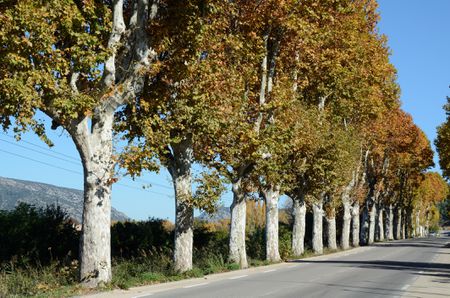
It is proposed that twelve million trees are to be planted across the UK by 2022 – equivalent to 18 Sherwood Forests. One million will be planted in towns and cities, and 11 million on rural settings. London will get more plane trees – the London Planetree is a hybrid of the genus platanus. Manchester will get more lime, oak and rowan trees. “Getting the right sort of trees on our pavements has the power to transform an area and dramatically improve people’s well-being,” William Worsley, the Government’s first official ‘tree champion’, said on revealing details of the plans.

avenue-of-plane-trees-in-provence-531277472-5886331c5f9b58bdb388b0ae
An avenue of Plane Trees in Provence

Evidence of the rare Angel shark found off the Welsh coast!

Scientist have found evidence that one of the world’s rarest shark species is living off the Welsh coast. Angel sharks are only established in the seas around the Canary Islands, meaning that Wales could be an important habitat for the crucially endangered species. Marine biologist Joanna Barker spotted a mention of the presence of the animals in Wales 100 years ago in a book. An appeal to fishermen and locals revealed photos of the sharks in the 1970s, as well as convincing reports of recent sightings.  The flat sharks spend most of their time on the seabed, where they are well camouflaged. They grow up to about 5ft in length and are also referred to as monkfish – though not the species we find at the fishmongers!

1200px-Squatina_australis

www.richardthedogtrainer.co.uk

Analytical concepts used by geographers and environmentalists

Worldwide population growth is greatly boosting farmland prices. This has resulted in ‘the great land-grab’ – UK observers will see this particularly in East Anglia and Lincolnshire in recent years. The need for greater mechanisation in farming has, hitherto, shaped the look of our countryside. Farming is becoming industrialised to the extent of greater institutional farming at the expense of owner farmers, hobby farmers and ‘pastoral’ farming. Speculators, individuals and investment funds will diversify their portfolio over two or more countries to counter the potential for political unrest, climatic uncertainty and possible pestilence.

Analytical concepts fall into three broad categories:-

  1. Time and place – environmental change will always occur at a particular time in a particular place. To understand the implications, analysts need to look further afield.
  2. Risk and uncertainty – decisions concerning the environment are nearly always taken with uncertain, incomplete, unclear or inaccurate information.
  3. Value, power and agency – (a) value: what is of worth, merit or importance (b) power: what CAN be achieved by persons or institutions (c) agency: the difference that these persons or institutions can make and what they would LIKE to achieve.

Since the 2008 financial crash speculators now seek more tangible assets including land. As a hedge against uncertainty and to gain control of prices, certain countries and food wholesalers are increasingly buying up land at home and abroad. This is particularly true of China, Africa, South America and Persian Gulf countries known to suffer from extremes in climate.

This blog acts as an introduction to environmental studies. The above paradigms aim to focus the mind and act as an anchor point! The blog is to be continued.

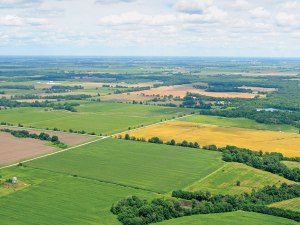
Picture shows a typical East Anglia country scene.

farmland lindseybenne-fjm_0704

For discussion group – redirect to: https://www.facebook.com/groups/volatileplanet/

Are dogs overrated?

Dogs are not as clever as humans think. An Exeter University team examined 300 studies on animal intelligence, and concluded that whilst dogs have an unusual skill set, they are not inherently smarter than other animals. For example, sheep are just as good at distinguishing humans by their faces; sea otters are better than dogs with tools; and pigeons are better at remembering events. Even dogs’ renowned olfactory powers are not that special: pigs have an equally sensitive sense of smell.

masac07

For discussion group – redirect to: https://www.facebook.com/groups/volatileplanet/

The alarming decline of the Namibian desert horse.

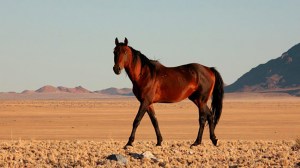
Africa’s only population of wild horses – on the eastern fringe of the Namib Desert – is facing extinction owing to years of drought that has caused hyenas to move into the herd’s area. The horses are descended from European chargers, which bolted from an army camp in colonial South West Africa in 1915. (Namibia was a German colony between 1884 and 1915). Over the generations, they have adapted their behaviour to survive in ultra-dry conditions. But since 2013, the herd has shrunk from a reported 300 to a mere 80. Not one foal has survived since 2012!

wild_horse_landscape_neweb

For discussion group – redirect to: https://www.facebook.com/groups/volatileplanet/

The British obsession with ‘class’!

Since Pierre Bourdieu’s (1939 – 2002) hypothesis in the 1960s about the British class system (see previous blog) things have moved on – though not necessarily improved! Karl Marx (1818 – 1883) spoke about the ‘bourgeoisie’ and the ‘proletariat’ to describe the distinction between the land owning gentry and what he described as the exploited working class. The terms ‘precarious proletariat’ or ‘precariat’ are used today in modern sociology.

So, what brought about the class system in the first place as it applies to Britain and, to a similar extent, in the US? The Neolithic Revolution started about 12,000 years ago when hunter gatherers settled down as homesteaders, farming the land, creating villages, ever increasing in size. Cynologists are particularly interested in this period as it coincided roughly with the domestication and dogs in particular and other farm animals for meat, milk, fur, wool and skins. This marked the beginning of land ownership with the employer versus employee relationship. Recent anthropological and archaeological studies at Bristol University made huge discoveries from burials throughout Europe, particularly Germany. Those buried with tools, in areas of loess and productive soils, were better nourished than those without tools which were found in poorer regions. This would suggest the beginning of the heritable land and livestock acquisition model and a culture of the ‘haves’ and ‘have nots’ that persisted throughout the industrial era culminating today with homo scientificus! We can see that the seeds of inequality were sown way back in the Neolithic.

The Norman Conquest in 1066, under Duke William II, made a huge impact on the indigenous Anglo-Saxon population. It ended the system of noble hierarchy replacing it with a feudal system. The French conquerors spoke Norman-French whilst the conquered, very often enslaved, spoke what was considered an inferior Anglo-Saxon form of English. This further added to what was an already an unequal society. Their Lordships would grant fiefdoms at their sole discretion to those willing to serve under them in wars. The feudal system of rank and order survived until the beginning of the industrial revolution in the late 18th century. This created a huge opportunity for money owning entrepreneurs; the ‘middle class’ defined by Marx as the bourgeoisie or capitalists. Conversely, those dependent on wages, very often living hand-to-mouth, the proletariat, were described as the ‘working class’.

Under eleven years of the Thatcher government starting in 1979, lower earners took another blow. There was a severe and lasting downturn in manufacturing, record levels of unemployment, the sell-off of affordable housing, a sharp rise in rough sleeping in empty shop doorways, interest rates out of control and the proposed imposition of a ‘poll tax’. This fueled anger and created even greater inequalities as the thought of the day was that money would ‘trickle down’ from City of London wealth makers.

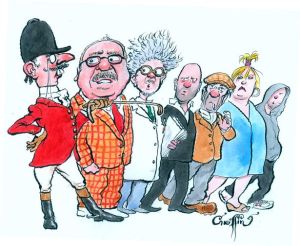
To this day their Lordships’ interests are still represented in the House of Lords; everyone else’s, the commoners, in the House of Commons. This helps perpetuate the dysfunctional British system of ‘upper class’, ‘middle class’ and ‘working class’ as hitherto described by sociologists. Bourdieu attempted to qualify this when writing about economic, social and cultural capital (as described in my previous blog). The British have almost an obsession with pigeon-holing people – and themselves! Nowadays the lines are blurred with much overlapping and grey areas in between – not relevant to the 21st century! This prompted the 2013 BBC Great British Class Survey in conjunction with Mike Savage from the London School of Economics and Fiona Devine of the University of Manchester. Their rationale was that class is no longer defined by one’s job; rather one’s acquired economic, social and cultural capital. For example one may enjoy listening to opera but may not be able to afford going to the opera! Over 161,000 people were surveyed and a new model of seven groups emerged. (NB: I have included an eighth group marked with *).

  1. Wealthy elite: The most privileged group in the UK, distinct from the other seven groups through its wealth. This group has the highest levels of all three capitals.
  2. *New money: Usually high in economic capital but not necessarily in social or cultural capital. People in this group consist typically of high profile entrepreneurs, highly paid actors and footballers.
  3. Established middle class: The third wealthiest scoring highly in all three capitals. The largest and most gregarious group, scoring second highest for cultural capital.
  4. Technical middle class: A small, distinctive new class group which is prosperous but scores low for its social and cultural capital. Not particularly gregarious or extrovert, those here may enjoy listening to opera or Beethoven, for example, but prefer to stop indoors.
  5. New affluent workers: A usually young group which is socially and culturally active, with middle levels of economic capital.
  6. Traditional working class: Scores low in all forms of capital, but is not completely deprived. Its members enjoy reasonably high house values, due to this group having the oldest average age of 66.
  7. Emergent service workers: A new young, urban group with relatively low economic capital but high ‘emerging’ social and cultural capital. Examples may include junior doctors, nurses, train and bus drivers, fire fighters.
  8. Precariat, or precarious proletariat: The poorest, most deprived group, scoring low for all three capitals. Their everyday lives are ‘precarious’. Examples may include ‘nil hour contract’ workers in shops, coffee shops, mini cab drivers, delivery riders. Here there is a case for a ninth group; homeless or underclass. Some of those homeless will have jobs paying insufficient wages to afford proper accommodation or food. So what went wrong – apart from the obvious? (This brings me back to my original question in the previous blog – which I will attempt to answer another day!). https://volatileplanet.blog/2018/12/31/all-children-are-born-equal-or-are-they/

Paul-Routledge-cartoon

DIPTONGO

A short story.

Diptongo is a very nice man. The problem is he has a split personality.

On days WITHOUT the letter ‘d’ he can be very determined and forceful ruling his kingdom with an iron fist. His best friend and brother in arms had better watch out as Diptongo has one eye on his brother’s throne and one eye on his own back. You see, he is ambidextrous and imagines himself to be a chameleon. To make matters worse he kicks his football with his left foot; his right foot on Sundays. And to think they say a leopard never changes its spots!

On the other days Diptongo can be weak with a liver of lily juice. He lives in the clouds with the cuckoos. His holy residence, however, is upon the Plain of Salisbury. The Wise One told the Court that his preoccupation is with the arid, scorched earth of Almeria and that he visits his brother upon the spirit of the Sweet Stuff.

His favourite meal is shrimp soup and marshmallows washed down with a pint and a half of Bitter Sweet. On Sundays he unties his pink ribbons and drinks two hogsheads of Babysham.

Diptongo’s third cousin, Dramaticus, has, since school aspired to become a poet. However, his tutors at the Iglesia de Santa Maria in Mahon had different ideas. They said he should get a proper job as a monk in the Great Shrine of Tanzania in the foothills of Mount Kilimanjaro. Dramaticus saw a hole in the wall, through which he made The Great Escape, then plugged the hole with another brick. At the age of 61 he had become the Poet Laureate for the mighty King Obama in La Casa Blanca. It was not easy as there was stiff competition from Diptongo’s other third cousin, Egbert, from Oslo. Dramaticus managed to keep a stiff upper lip and won the Bicycle Race to La Casa Blanca.

However, I digress and this is another story for the next millennium. In the meantime The Wise One spotted another hole in the wall. He suggested to the Court of Salisbury that Diptongo, having kicked his football into touch, be spirited to the lap of King Juan of Almeria. His true love lay there regardless. Here they should be married thus cementing Anglo-Spanish relationships for the next millennium and a half. Or at least until the passing of the ozone, predicted by The Wise One, to be on the thirtieth day of February in the year of Our Lord two thousand and thirteen. King Juan and Queen Diptonga (as he became known) lived happily ever after having raised a family of five and eighty crabs, two and forty doves and a partridge in a pear tree. SOL. Silencio.

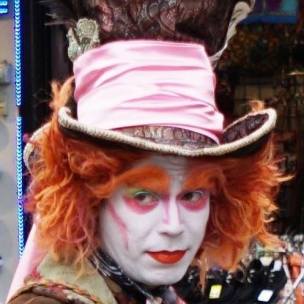
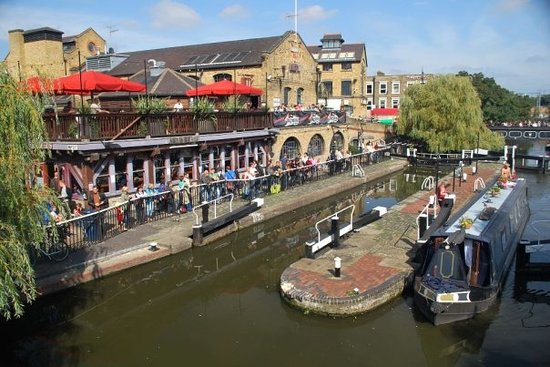
Diptongo on a recent visit to Camden Lock.

17353337_10212135909450466_6908263042103439158_n

Capitalist Realism vs Socialist Realism!

First came ‘socialist realism‘ and ‘realistic art‘, an art form depicting the ‘glory’ of communism by portraying its achievements as if in the real world. Established in the Soviet Union in the 1930s but equally applying to many other communist regimes worldwide. In contrast, and almost as an antidote, came ‘capitalist realism‘ and ‘pop art‘. This stresses the materialistic ideology of capitalism and has hitherto been associated particularly with Germany, the UK and America, starting with the pop art culture of the 1950s and 1960s and commodity art in the 1980s and 1990s. The pictures show examples of realistic art and pop art.

Mark Fisher, in 2009, famously wrote ‘Capitalist Realism – Is There No Alternative?’ published by Zero Books. This is available through Amazon.


The Gentrification of Regeneration!

Since the decline of manufacturing industries in the UK the country places much emphasis on the export of services, especially financial services and banking. This has led to the centralisation of power and money in the south east and in particular London. Successive governments have attempted to regenerate other regions of the UK with cash injections, incentives and marketing ploys to bolster local economies and communities – to their bemusement. Think of the Northern Power House initiative under the Cameron government which the May government appear to have reneged on though this is denied. Ever growing austerity has largely turned the idea into a pipe dream!

Gentrification of regeneration is a covert attempt by central and local governments along with planners to sweep poverty under the carpet in the hope that monied people will see investment opportunities, move in, buy properties and shops thus dragging an area up by the boot straps. An example is Camden Town in north London.

I spent much of my childhood in Camden Town, eight stops up from Waterloo on the Northern Line. The Lufwaffe dropped many thousands of tons of bombs on Camden Town during the blitz though nothing like those dropped on the East End and the northern cities. My father walked me round the back streets to survey the damage with exposed wallpaper and curtains flapping in the wind. Oddly my parents, aunts and uncles spoke very little of this odious episode in history.

Some years later the railway bridge over Camden High Street received a coat of paint and the words ‘Camden Lock’ appeared in bright yellow on a green background. This had the apparent effect of marking the beginning of the end of the decades of austerity the area had known. Almost overnight the tramps and associated poverty seemed to disappear. The greengrocer stalls were replaced with tacky souvenir stalls selling memorabilia of the Royal Family and London buses. Nowadays an eclectic array of independent retailers live and work alongside some well known national brands such as Costa Coffee, Bon Marché and others.

The souvenir vendors are still present but have mostly moved indoors to the shelter and warmth, indicating that there is, indeed, money to be made from the sale of their wares; the prices inexorably keeping up with inflation. Paradoxically, a basement flat only 300 yards away will cost well in excess of a couple of million – money my parents could only dream about! Of course this is prime commuter belt and other towns and cities do not have this luxury – think of Swansea, Bognor Regis, Barnsley and many others. Conversely, Sheffield, Leeds, Newcastle and Manchester are reviving, albeit largely on the back of gentrification!

london-camdem-lock-13

Redirect to: www.richardthedogtrainer.co.uk